


Build diverse food systems for post-COVID-19 world
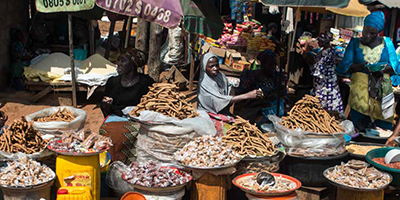 The spread of COVID-19 threatens food security for increasing numbers of people around the world. Now more than ever, AIRCA stands strong in hope and unity for global food and nutrition security. Read more
Strengthening AIRCA Monitoring and Evaluation Systems
Article By: Boru Douthwaite
Senior Researcher - Innovation Systems, Social Learning and Theory of Change
Agricultural research and development organizations are under pressure to have and report more impact. Integrated monitoring, evaluation and learning (MEL) systems can help, however they do not evolve overnight.
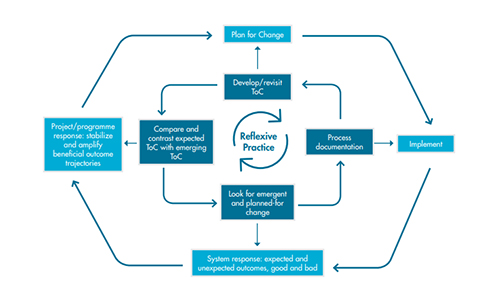
MEL specialists belonging to the Association of International Research Centers in Agriculture (AIRCA) Community of Practice (COP) on monitoring and evaluation (M&E) have found that their respective MEL systems are following a common trajectory that progresses through four overlapping stages:
- Basic accountability - meeting donor accountability requirements, usually at project level.
- Outcome monitoring and impact evaluation - tracking project outcomes, both expected and unexpected, and showing their contributions to program- and center-wide targets and goals.
- Learning and strategic planning - using learning across projects in adaptive programming and strategic planning.
- Evaluation research - staff develop new MEL approaches and contribute to research on uptake and scaling processes.
Combating the fall armyworm in Africa
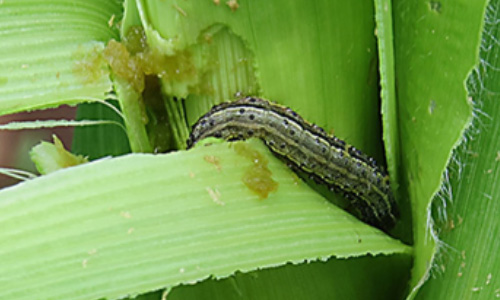 The European Union (EU) provides new funding to icipe to strengthen its efforts in the management of the fall armyworm in Kenya, Ethiopia, Rwanda, Tanzania and Uganda. Read more
AIRCA Capability Statement
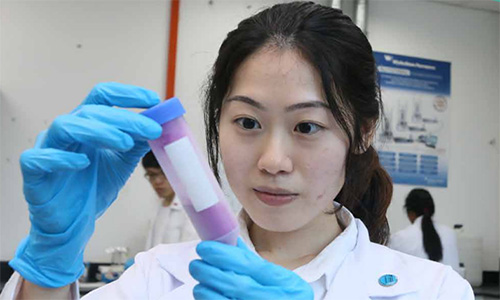 Nutrition Research Capabilities - Transforming rural livelihoods and landscapes
In 2017, AIRCA formed a Research Tasks Force (RTF), to serve as a catalyst for shared intelligence between members and information exchange within AIRCA institutions, and to also to identify founding sources for joint projects. A first area of focus for the RTF is Research for Nutrition and their first product is a joint Capability Statement. The document outlines the main capabilities and facilities of each AIRCA member in relation to nutritional security as a basis for more detailed engagement with partners and funding agencies.
Currently one of AIRCA's priorities is to demonstrate how agricultural biodiversity can make a meaningful contribution to achieving the targets of SDG 2 and achieving nutritional security through agricultural diversification. The development of the Global Action Plan for Agricultural Diversification (GAPAD), spearheaded by CFF and supported by fellow AIRCA members, is one of the current activities.
The AIRCA Nutrition Research Capability Statement, developped by the AIRCA RTF, provides a very brief overview each AIRCA member's expertise in the areas of crop production, crop improvement, post-harvest management, human and animal nutrition, social economic assessment and others.